Khayelitsha police chief calls for community support against gender-based violence
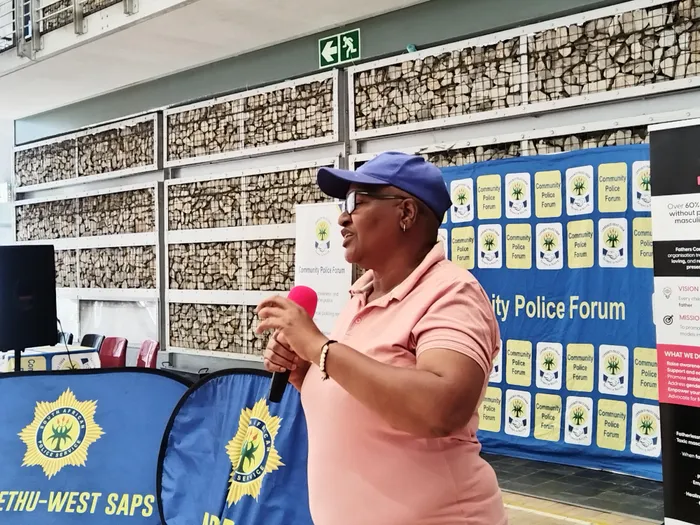
Funeka Soldaat has urged GBV victims to contact neighbourhood watches when they do not get help at police stations.
Image: Phiri Cawe
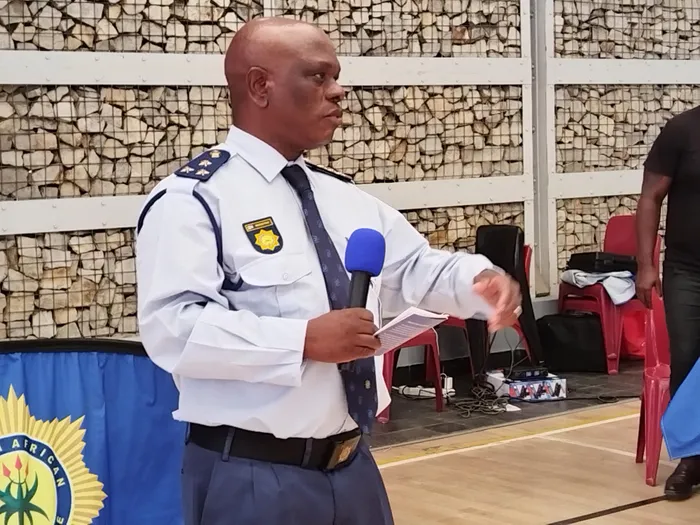
Brigadier Mnoneleli Magobiyane, Khayelitsha sub-district commissioner, is not happy with the high number of gender-based violence cases in Khayelitsha.
Image: Phiri Cawe
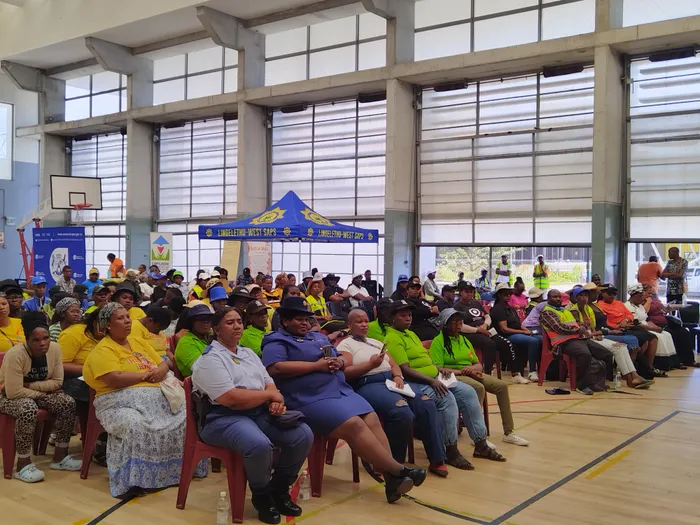
The community of Khayelitsha gathered at the Thusong Hall on Thursday for the gender-based violence awareness campaign hosted by the police.
Image: Phiri Cawe
The Khayelitsha police sub-district has called on residents to unite in the fight against gender-based violence and femicide (GBVF), as it marked the 16 Days of Activism for No Violence Against Women and Children campaign on Thursday, December 4, at the Thusong Centre in Khayelitsha.
In keeping with the spirit of the international campaign, the district brought together various organisations and government stakeholders to raise awareness and highlight the national crisis of violence against women and children.
A call for collective action echoed throughout the event. Brigadier Mnoneleli Magobiyane, Khayelitsha police sub-district commissioner, emphasised that survivors of GBV must be treated with respect and dignity, particularly at police stations.
Brigadier Magobiyane said ending the GBVF required a united front. He urged residents to stand against abuse by reporting perpetrators at their nearest police station or by contacting Crime Stop.
He said he was concerned about the high prevalence of GBV across all Khayelitsha police stations, noting that Khayelitsha, Makhaza, Harare, and Lingelethu West consistently appear in national crime statistics.
Assuring victims of the police’s commitment, he said: “As sub-district commissioner, I make it a point to push station commanders to fight this scourge. I will support all GBV campaigns. We will support the victims. GBV victims have a right to be treated with dignity. We have victim support rooms that are well looked after by our volunteers. They must report GBV.”
Khayelitsha sub-district GBV coordinator Funeka Soldaat, who also shared her personal experience as a survivor, said the 16 Days of Activism alone was not enough to address the magnitude of the problem. She called for a stronger political will to combat all forms of violence.
“This is not enough — it should go beyond the 16 Days of Activism. As a victim, I had to deal with my challenges on my own. I know people are sometimes unhappy with the treatment they get at police stations, so I advise them to also contact neighbourhood watches,” she said.
She described GBV as a “pandemic” that needs urgent and sustained interventions far beyond the annual campaign.
Community activist Shamila Nicolas said that unity between communities and police was essential to strengthening the fight against GBVF. “We are gathered here to reaffirm our unwavering commitment to building a world where violence has no place,” she said.
Lumkile Sizila of Amadoda Aqotho, a non-governmental organisation working primarily with young men, said men must take responsibility for ending violence.
He also urged men who are victims of abuse to speak out instead of suffering in silence.